


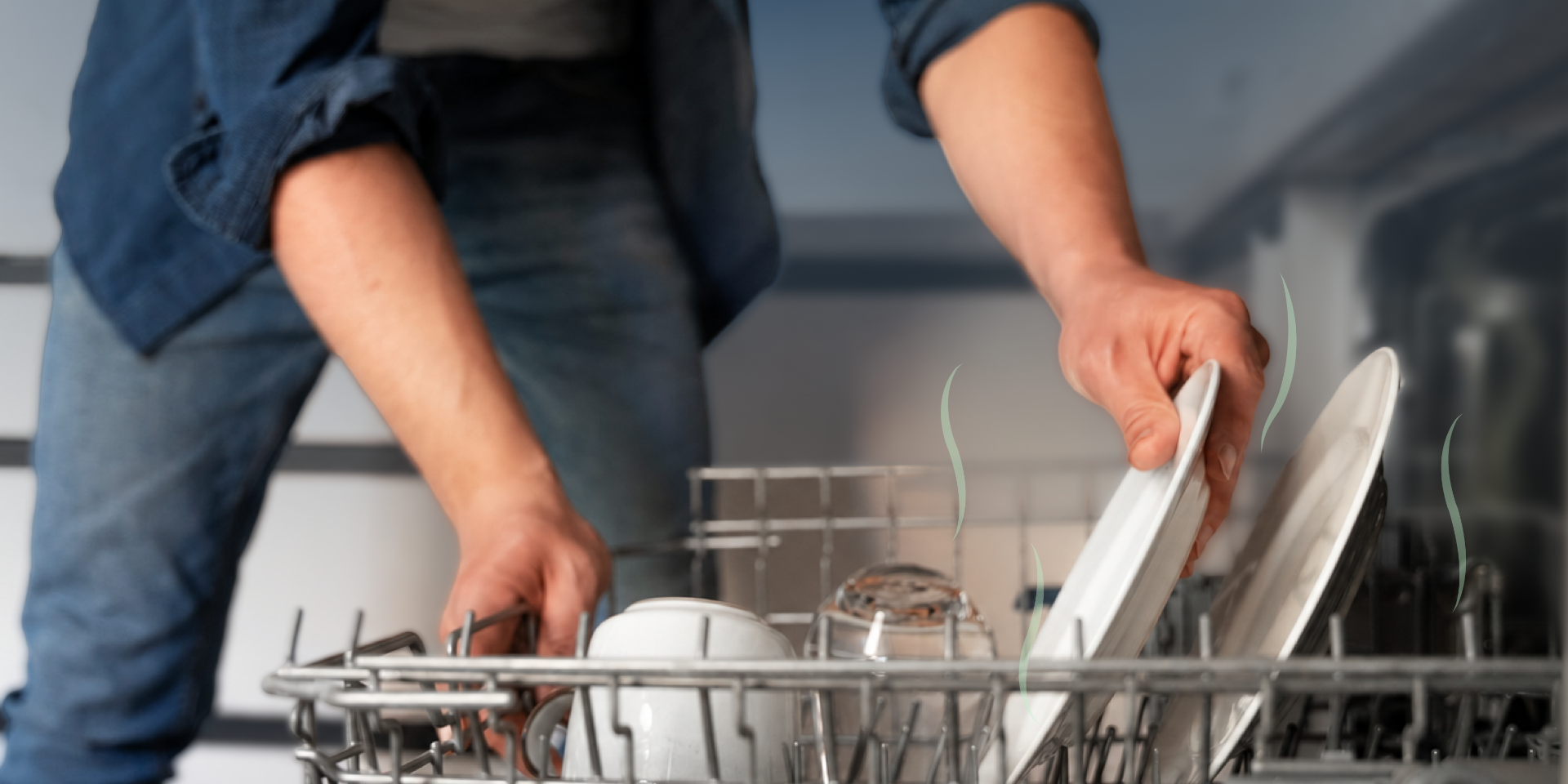

Your dishwasher cleans dirty plates every day, so it is easy to assume the appliance cleans itself along the way. Then one day, you open the door and get hit with a smell that definitely doesn’t belong near clean dishes.
Usually, the smell comes from bits of food, grease, or water sitting somewhere out of sight. Your dishes may still look perfectly clean, which is why the buildup often goes unnoticed at first.
The good news is that you can handle most dishwasher odors at home. Follow the steps below to track down the smell, clean the problem areas safely, and keep the odor from coming back.
1. Start With the Dishwasher Filter
If you want to keep the cleaning process simple and check only one part, start with the dishwasher filter. It catches food particles before they can circulate back onto your dishes. Any debris left behind can start smelling sour after sitting in a warm, damp dishwasher.
- Check the owner’s manual before removing any parts.
- Pull out the lower rack and look at the bottom of the tub. Many dishwashers have a cylindrical filter near the lower spray arm.
- Keep in mind that some models use a self-cleaning filter or hard food disposer instead of a removable filter.
- If the filter is removable, rinse it under warm running water.
- Use a soft brush and a small amount of dish soap to loosen stubborn grease.
- Put the filter back in place and make sure it locks securely.
One important thing to remember: never run the dishwasher without the filter properly installed.
2. Clean the Door Seal and Other Interior Surfaces
The filter catches plenty of debris, but it does not catch everything. Grease and food residue can also settle on surfaces that receive less direct spray during a wash cycle.
- Wipe the folds of the door gasket with a soft cloth and warm, soapy water.
- Clean the bottom edge and lip of the door, where grime often collects out of sight.
- Wipe the tub corners and floor.
- Clean around the detergent dispenser and its flap.
- Give each spray arm a quick spin, then look for food or debris stuck in the small holes.
3. Run an Empty Cleaning Cycle
You've removed the grime you can see. Now, run the dishwasher empty to flush out anything left behind.
- Select the Self Clean or Machine Care cycle if the dishwasher has one.
- If there is no dedicated cleaning cycle, follow the owner’s manual and the directions on a dishwasher cleaner approved for the model.
- Use only one cleaning product at a time.
- Never mix bleach with vinegar, ammonia, or another cleaner. Mixing cleaning products can release dangerous gases.
- Do not add regular dish soap because the suds can overflow and cause a leak.
A cleaning cycle may be enough to clear a mild odor. If the smell returns quickly, the problem may be poor drainage.
4. Check Whether There’s Standing Water
Dirty water that remains between loads can quickly develop an unpleasant smell. Here are a few checks you can make without taking the dishwasher apart:
- Check the tub after the cycle finishes. A small amount of clean water around the filter may be normal, but a visible pool across the tub floor is not.
- Turn off the dishwasher and remove the filter if the owner’s manual allows it.
- Clear only the debris you can safely reach.
- Wear protective gloves and use tongs to remove broken glass or sharp objects.
- Check whether the kitchen sink drains freely.
- If you have a garbage disposal, run it before starting the dishwasher.
- If water continues collecting in the tub, you may need to schedule a professional repair.
5. Check the Drain Connection
A sewage-like or rotten odor may be connected to a drainage problem, especially when dirty water remains in the tub. Here’s how to check the drain connection:
- Look for slow draining, water returning after a cycle, or an odor that gets stronger when you use the sink.
- Open the cabinet under the sink and check the dishwasher drain hose for kinks or damage.
- Confirm that the hose rises in a high loop or connects through an air gap, depending on the installation requirements.
- Check the air gap for visible debris if your sink has one.
- If the dishwasher stopped draining after installing a new garbage disposal, the disposal’s dishwasher-inlet knockout plug may still be in place.
- Ask an appliance technician or plumber to correct a blocked hose, missing high loop, or improper connection.
- Do not disconnect the hose or pull out the dishwasher unless you are qualified to do so.
How to Keep Dishwasher Odors From Returning
Getting rid of the smell is only part of the job. Food residue and moisture can gradually collect again, especially when the dishwasher runs frequently or dirty dishes sit inside for several days.
You do not need to deep-clean the appliance every week. A few simple habits can help the dishwasher stay fresher between cleanings:
- Scrape bones, pits, labels, and large food scraps from dishes before loading.
- Check the filter regularly. Don’t wait for an odor to remind you.
- Avoid overloading the racks so water can reach every surface.
- Run the dishwasher regularly instead of leaving dirty dishes inside for long periods.
- If the manual permits it, leave the door slightly open after unloading so the interior can dry.
Cleaning the interior about once a month is a practical starting point for many households. A heavily used dishwasher or a home with hard water may need attention sooner.
When the Odor Needs More Than Cleaning
If the smell returns a day or two later, don't keep repeating the same cleaning routine. Look for standing water, leaks, error codes, gritty dishes, or grinding and buzzing sounds. If you notice any of these problems, it is time to have a technician take a look.
A burning or electrical smell is different from a food or drainage odor. Stop using the dishwasher and disconnect its power until a qualified technician can inspect it.
Before you consider a replacement, note that odor by itself is rarely a reason to replace a dishwasher. Replacement becomes more reasonable when the appliance also has repeated failures, costly repairs, leaks, or poor cleaning performance, especially as it approaches the end of its expected service life.
If a replacement makes more sense, browse Basil Appliance's dishwashers to compare sizes, filtration systems, wash cycles, noise levels, and other features for your kitchen.